
Leadership & Lifecycle Timing
When Founder Intuition Becomes the Ceiling
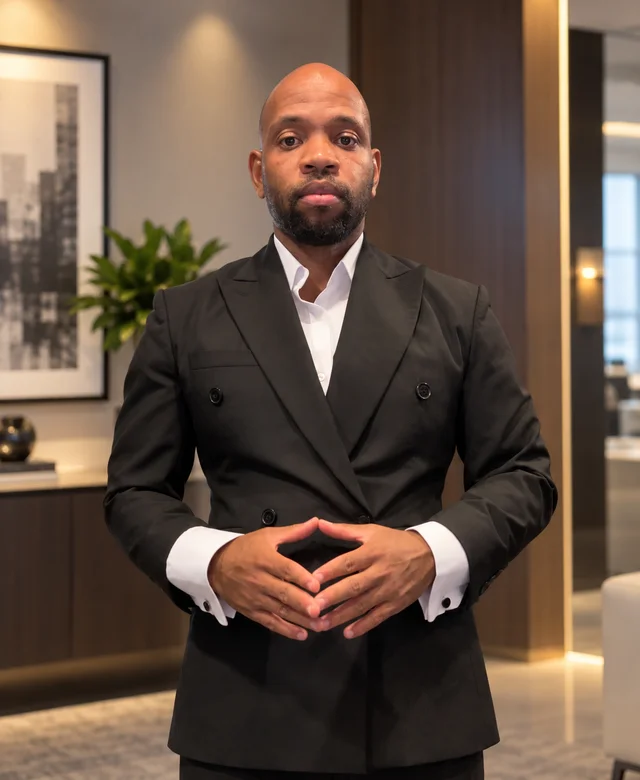
Chukwudum "Chumze" Chukwudebelu
October 14, 2026 · 7 min read
When Founder Intuition Becomes the Ceiling
BAAB AI · Business as a Baby

It starts with a subtle, quiet frustration on an ordinary Tuesday afternoon.
You open your laptop, glance at your inbox, look at your Slack channels, and realize that every meaningful decision in the business is sitting in a queue waiting for you.
Your lead marketer wants to know if the headline on the new landing page feels right. Your operations lead is asking whether a specific client should get a 10 percent credit after a delayed delivery. Your newest sales hire has drafted three separate proposals and will not send any of them until you look over the terms.
On the surface, it feels flattering. You built this company from a blank piece of paper. You know the product better than anyone on earth. You know every customer type, every pricing nuance, and every operational pothole because you dug the foundation with your own hands.
Then the weight sets in. You realize that while your revenue has grown, your calendar has turned into a hostage situation. You cannot take an uninterrupted weekend. You cannot step away for three days without projects grinding to a halt. Every time someone asks for your guidance, a quiet voice in the back of your mind asks the same bitter question: Why does nobody on this team think for themselves?
If you have caught yourself thinking that thought recently, I have uncomfortable news for you.
Your team is not lazy. They are not incompetent. And they are not avoiding responsibility because they lack ambition.
They are paralyzed because your personal intuition, the very superpower that brought your company to life, has become the hard ceiling on its future.
The Superpower That Got You Here
In the early life of a company, founder intuition is everything.
When your business is in the Baby stage, you do not have data, you do not have historical precedents, and you certainly do not have a library of standard operating procedures. All you have is your judgment, your speed, and your gut feel for what the market wants.
You sense that a prospect is about to walk away, so you alter the offer mid-conversation. You look at a raw product prototype, immediately spot three things that feel clumsy, and fix them before sunset. You read a customer complaint and intuitively know whether to apologize with a full refund or hold the line because the customer is unreasonable.
That is not luck. It is high-speed pattern recognition developed through thousands of hours of intense, focused immersion. You have lived with the problem so long that your brain processes inputs and arrives at conclusions without needing to show its work.
As the company takes its first steps into the Toddler stage, that raw intuition continues to pay dividends. It helps you find product-market fit. It keeps overhead low because you make decisions in seconds rather than committee meetings.
The problem is that intuition is entirely personal. It lives inside your nervous system. And because it lives only inside you, it cannot be trained, it cannot be delegated, and it cannot be transferred to another person by osmosis.
The moment you hire five, ten, or twenty people to help carry the load, an invisible trap snaps shut.
The Telepathy Expectation
When founders reach this crossroad, they usually make a common psychological mistake: they confuse their own subconscious pattern recognition with common sense.
You look at a sales pitch written by an employee and say, "No, this does not feel like us. Rewrite it."
When they ask what needs changing, you give vague feedback: "Make it punchier. It needs more grit. Make it feel more premium."
Two days later they bring back a second draft. You look at it, sigh in exasperation, and end up rewriting the entire document yourself at midnight.
You think: It is just faster if I do it myself.
From your seat, the employee failed to deliver. But look at the situation from their seat for a moment. They were handed an invisible target, given zero objective criteria, and asked to guess what tastes right to your palate. When their guess did not match your private instincts, they were quietly reprimanded.
Do that three times to any capable, self-respecting professional and you teach them a very clear lesson: Do not make decisions here. Wait for the founder to tell you what to do, because anything else is a waste of time.
By relying on unspoken intuition to run an expanding business, you inadvertently train your staff to be passive. You turn proactive problem solvers into order-takers, and then you punish them for not showing initiative.
Telepathy is not an operating model.
The Two Fatal Reactions
When founders realize their intuition cannot scale, they almost always react in one of two destructive ways.
1. The Control Freak Retreat
The first reaction is to pull the reins tighter. The founder decides that because nobody else can make decisions to their standard, they must approve everything. Every invoice over two hundred dollars, every customer refund, every blog post, and every email sequence must cross their desk.
This produces immediate operational congestion. Projects that should take three hours take three weeks. Talented employees grow frustrated and quietly leave for companies where they have room to breathe. The founder burns out, collapses under the sheer volume of trivial approvals, and the business flatlines.
2. The Bureaucracy Trap
The second reaction is the opposite extreme. The founder panics, decides they are bad at management, and hires an expensive corporate executive or downloads a library of eighty-page corporate handbooks.
They install heavy approval chains, weekly status committees, and complicated key performance indicator scorecards designed for a five-hundred-person enterprise.
The result is organ rejection. The process smothers the company. The speed, nimbleness, and distinct character that made the business special in the first place vanish overnight, replaced by corporate theater.
Neither path works. A growing Toddler business cannot stay dependent on one brain, but it cannot survive being wrapped in corporate red tape either.
The real answer is not replacing your intuition with bureaucracy. The answer is translating your intuition into decision architecture.
Translating Gut Feel into Decision Architecture
Decision architecture means taking the unwritten principles behind your gut reactions and turning them into clear, simple heuristics that other people can execute with confidence.
You are not trying to write a script for every possible scenario. That is impossible, and it turns your team into robots. Instead, you are building fences that define where the pasture ends, and giving your team complete freedom to run within those fences.
Here are three practical gates to turn your personal intuition into company-wide capability.
Gate 1: The "Why Behind the No" Gate
The next time you review someone's work and your gut says "no," do not fix it yourself. And do not just tell them it is wrong.
Force yourself to pause for three minutes and answer one question out loud: What specific principle did this work violate?
If a marketing email feels wrong, do not say "make it better." Identify the underlying rule. Is it because the email focused on features instead of the client's concrete problem? Is it because the tone was too academic rather than direct and conversational? Is it because you never use hype words like "revolutionary"?
When you identify the principle, write it down on a single page. Give that page a title like How We Communicate With Clients.
Every time you explain the reasoning behind your veto, you are extracting a piece of code from your intuition and depositing it into the company's shared brain. Over ninety days, those explanations naturally compile into an operating playbook that reflects your exact taste.
Gate 2: The Clear Perimeter Gate
People do not hesitate because they lack courage; they hesitate because the boundaries are foggy. If an employee does not know where their authority ends, they will treat every decision like a landmine.
Give your team explicit, non-negotiable perimeters.
For example, do not tell your customer support lead to "use good judgment on refunds." That sounds empowering, but it actually creates anxiety.
Instead, give them a defined boundary: You are authorized to issue an immediate refund or credit of up to $250 to any unhappy customer, no questions asked, if it resolves their issue on the first call. You never need my approval for amounts below that number. If the request is over $250, bring me the context and your proposed recommendation.
Notice what happens. A whole category of approval interruptions disappears in five minutes. More importantly, your team feels trusted because they know exactly where their playground ends.
Gate 3: The Reversible Decision Rule
Most decisions in an early-stage business are not fatal.
Jeff Bezos famously distinguished between two-way doors (decisions that can be easily reversed if they turn out poorly) and one-way doors (decisions that are irreversible or carry catastrophic downside).
Founders trapped in their own intuition treat every two-way door like a one-way door. They want to review the slide design, the vendor choice for office supplies, and the subject line of the newsletter as if a mistake would put the company into bankruptcy.
If a decision is reversible and the cost of being wrong is low, let your team make the call, even if you suspect you might have done it slightly differently.
If their choice works, their confidence grows. If their choice fails, it costs the company a trivial amount of money, and you gain a powerful coaching opportunity to refine their judgment. Judgment is a muscle that only develops when someone has to live with the consequences of their own choices.
Stepping from Toddler into Teenager
In the BAAB framework, the transition from Toddler to Teenager is rarely marked by a sudden jump in revenue. It is marked by a shift in how decisions are made.
A Toddler business is a vehicle driven entirely by the founder's stamina and intuition. If the founder falls asleep at the wheel, the car drifts into the ditch.
A Teenager business is an organization where the founder's intuition has been codified into shared principles, simple gates, and clear boundaries. The team understands what good looks like because the standards have been spoken, written down, and practiced.
You will know you are crossing that threshold when someone on your team brings you a finished project, explains how they solved a difficult problem using the principles you codified together, and you realize their solution is actually better than what you would have done yourself.
That is not loss of control. That is the beginning of real leverage.
Where Does Your Decision Engine Stand?
Is your business still running on raw founder hustle, or are you ready to build the systems that let your team walk on their own?
The free BAAB Stage Check looks at the operational realities of your company and tells you which stage you are truly in, and which gate you need to unlock next to keep moving forward.
The BAAB Dispatch
Get new essays in your inbox.
New lifecycle essays from Chumze, when they're published. Unsubscribe anytime.